Inspiration
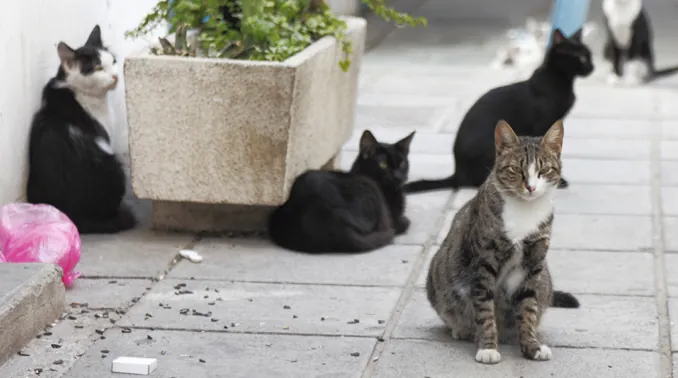
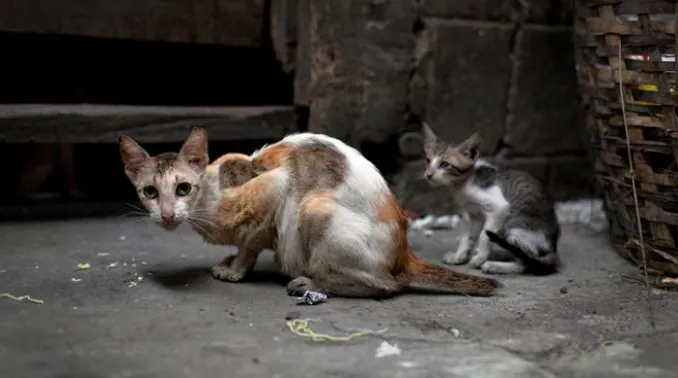
I once raised a cat that got lost; I followed the footprints, and finally followed them to the flower bed and found it in the grass. So I thought that when all the footsteps disappeared, the cat could go home. I usually see some cats in the community, some are lost and some are wild cats. Most of them live in poor environments. I want them to have a home, and based on this game design concept, I designed this board game.
Brainstorm
Read the diagram as text
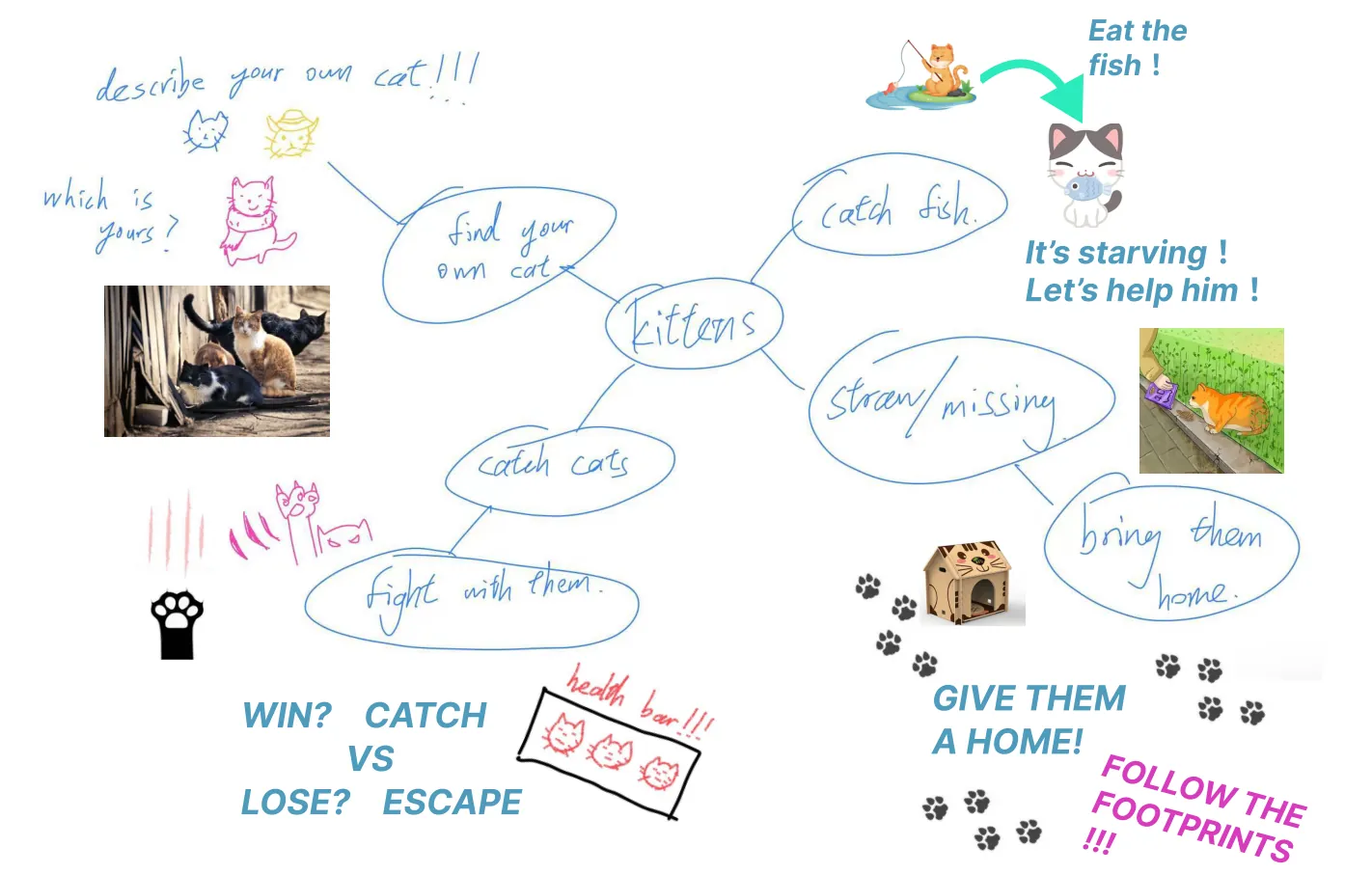
Hand-drawn mind map around the word Kittens, branching to find your own cat, catch fish, stray/missing, bring them home, catch cats and fight with them, surrounded by cat doodles, photos, paw prints and notes such as Eat the fish!, It’s starving! Let’s help him!, WIN? CATCH VS LOSE? ESCAPE, GIVE THEM A HOME! and FOLLOW THE FOOTPRINTS!!!
Pair to Play
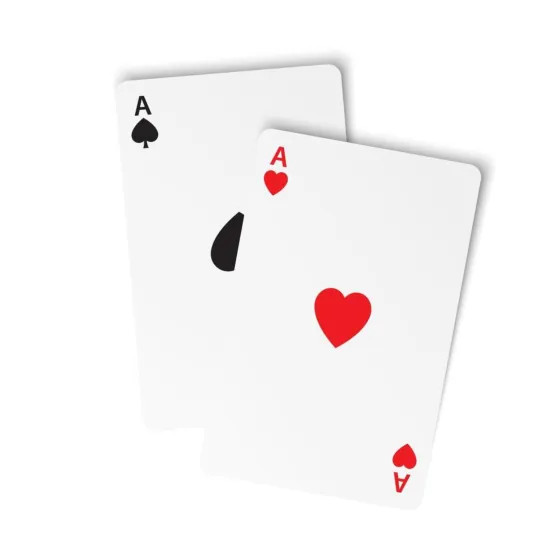
During brainstorming, I was inspired by poker’s card combinations and decided to apply them to a board game. Starting with the concept of a cat, I matched footprint and cat cards, aligning their directions. This led to the creation of the first version of the Cats Back Home board game, incorporating the strategic element of playing cards.
First Prototype
Components
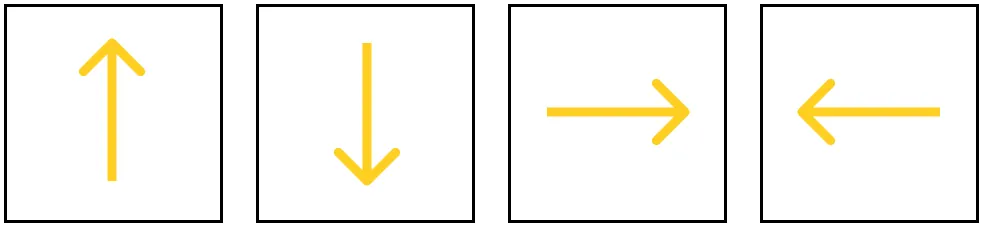
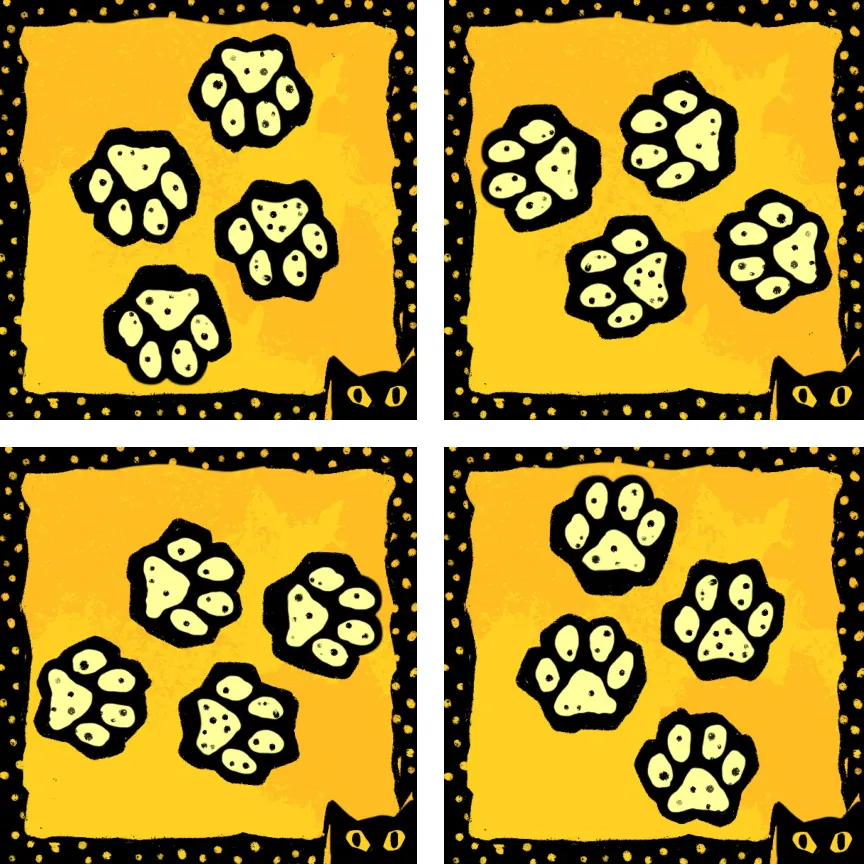
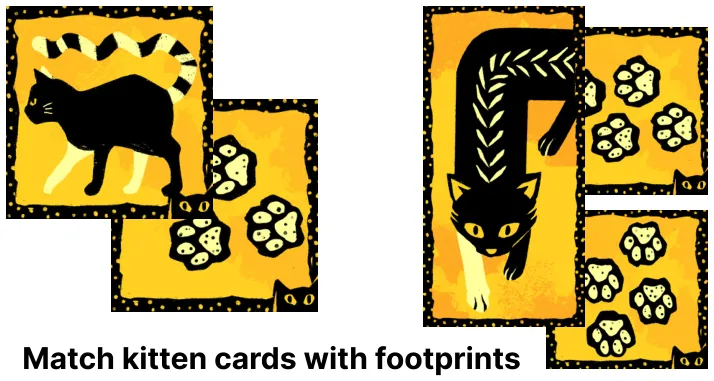
Footprint Cards: 4 directions of up, down, left, and right.
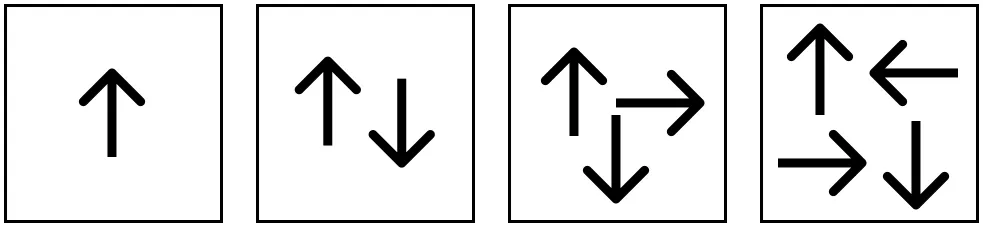
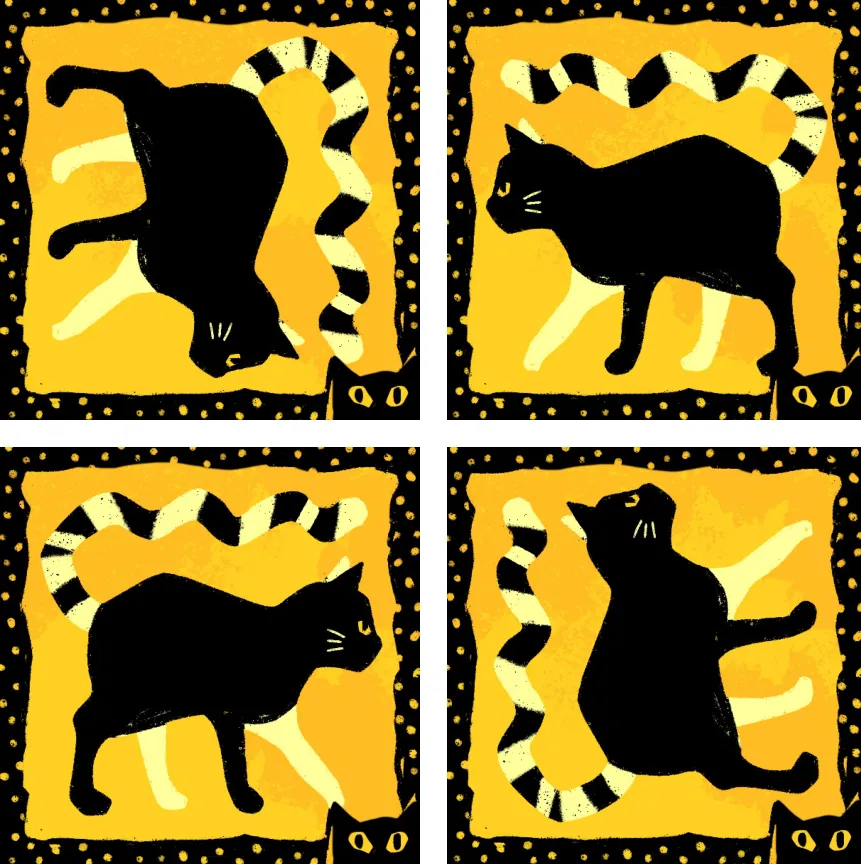
Cat Cards: 4 types, each featuring 1 to 4 cats on top, and the orientation of each cat may vary.
D6 Die: 1 D6 die; when replenishing cards, footprint cards are added based on the number rolled.
Basic Rules
- The first person to play all their cat cards wins.
- Cat’s card must cover footprints played by players, aligning with the footprint direction.
- To cover cat footprints, the played card’s footprint direction must match the cat’s.
- Players start with 10 cards (4 cat-1, 3 cat-2, 2 cat-3, 1 cat-4) and 5 footprints (top, bottom, left, right). After each turn, draw footprints based on the number rolled by the die.
- Failure to play any cat cards results in a penalty of randomly drawing two cat cards.
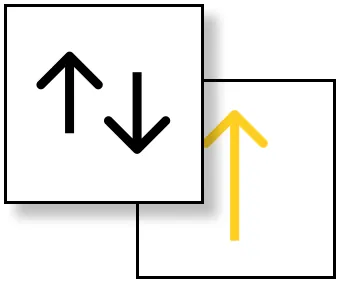
A cat card on top, covering a footprint card in the corresponding direction below, could count as a ‘pair’ to go.
Test findings
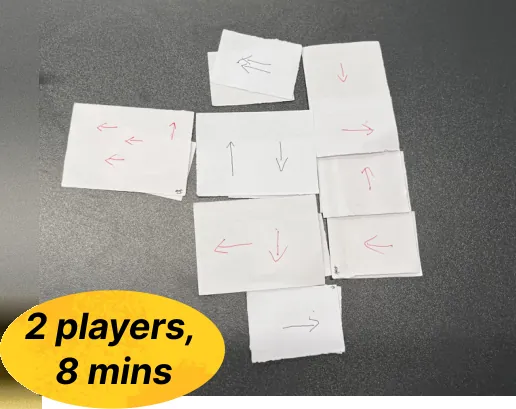
Lack of restrictions
The random placement of the game’s cat card on the table makes direction and overlap less meaningful, allowing players to place cards freely, making it too simple.
Excessive randomness
The number of footprint cards drawn at the end of each turn is solely determined by the dice throw, introducing significant luck that greatly impacts the difficulty of subsequent cat pairing. Bad luck can significantly disrupt the normal flow of the game.
Version 2
Newly added component
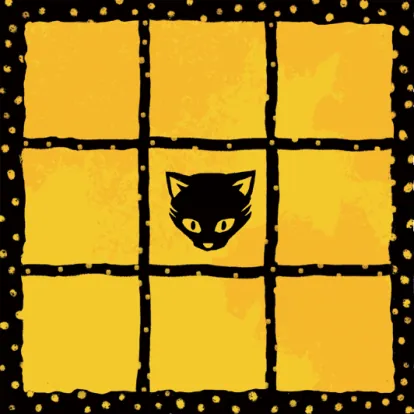
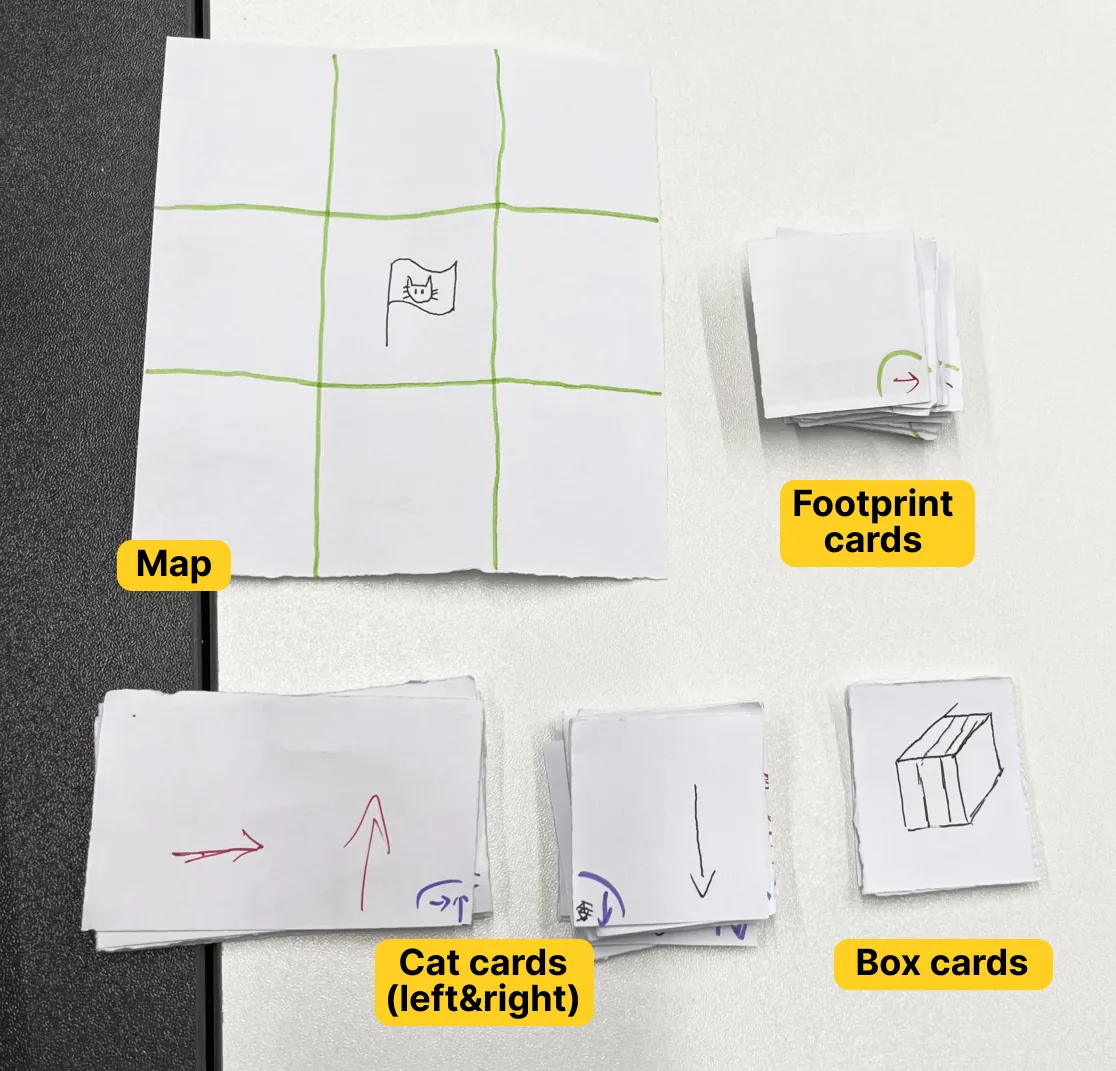
Map: A 3 by 3 grid map where the cat moves within.
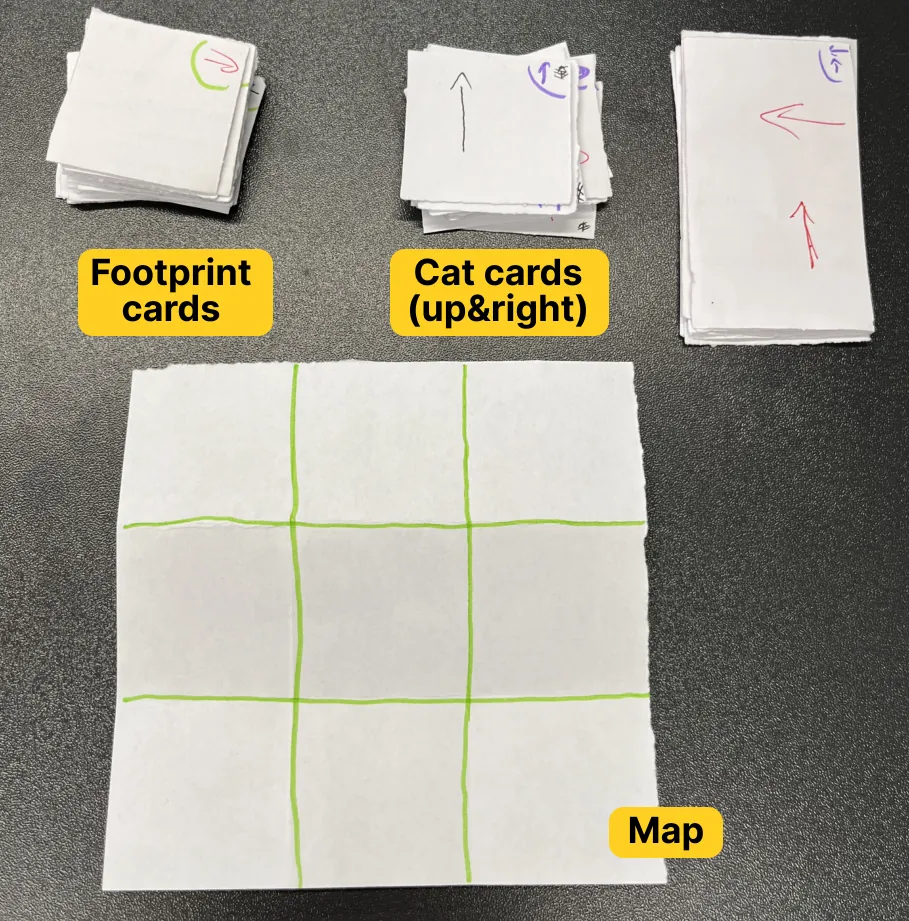
Modified card replenishment method
In the previous version, using dice for replenishing footprint cards led to uneven benefits. In this version, the dice are removed, and players consistently replenish 2 footprint cards at the start of their turn.
Newly added rules
- The direction in which the kitten walks should not collide with the map’s edge.
- In one turn, players cannot play cards in the opposite direction of the incoming direction.
Test findings
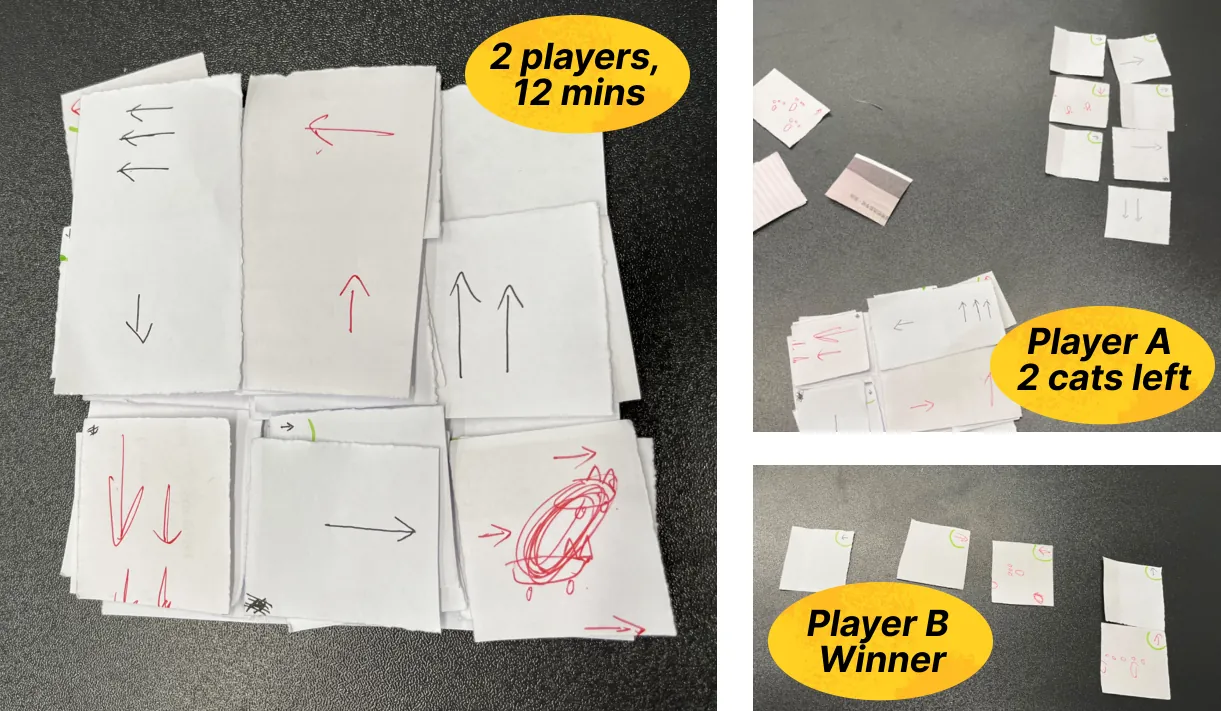
Excessive possibility of extreme luck
If the player is lucky, he can play all the cards in one round, and the game lacks fun and fairness.
Lack of interactivity
Players only focus on playing their own cards and do not have any interaction with other players.
Version 3
Newly added component and its rule
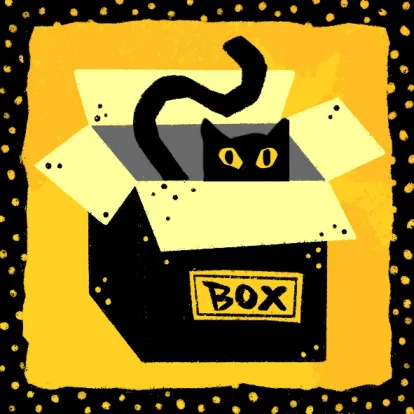
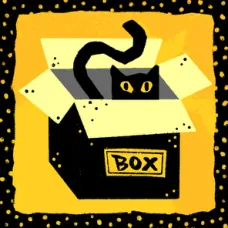
Box card: A special type of cat card that can block one grid. After placement, it remains on the map for a round, until it is removed when it’s the placing player’s turn again.
Test findings
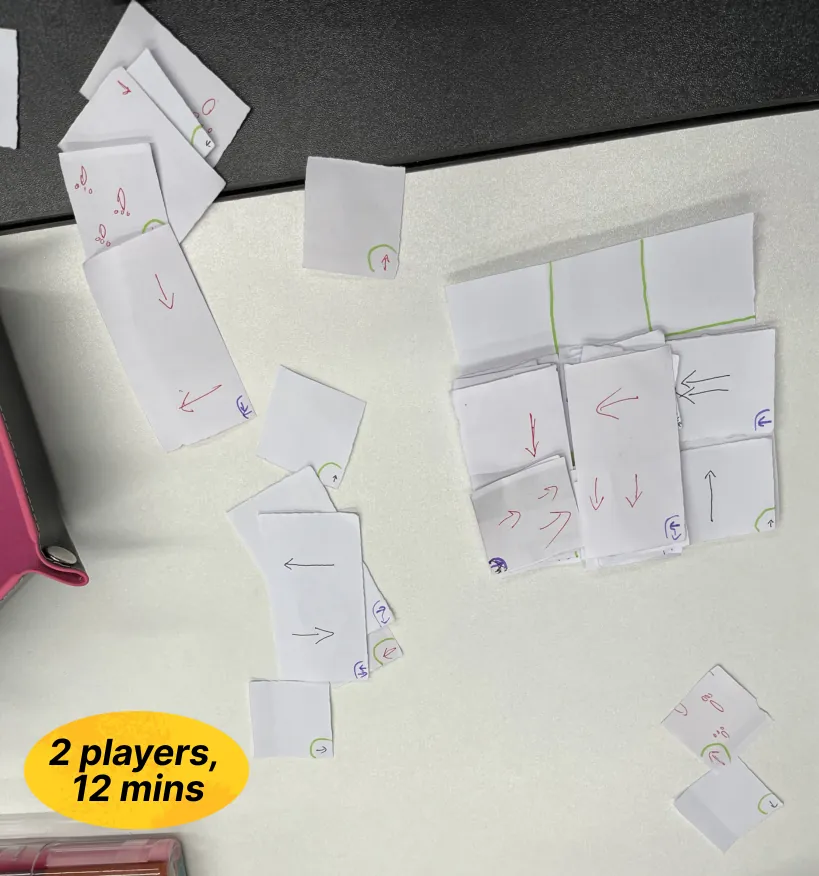
Deadlock situations
When the cat is attached to the wall, there is basically no way to crack it; when encountering boxes, players are unable to play cards and can only be punished without any evasion methods.
Version 4
Newly added component
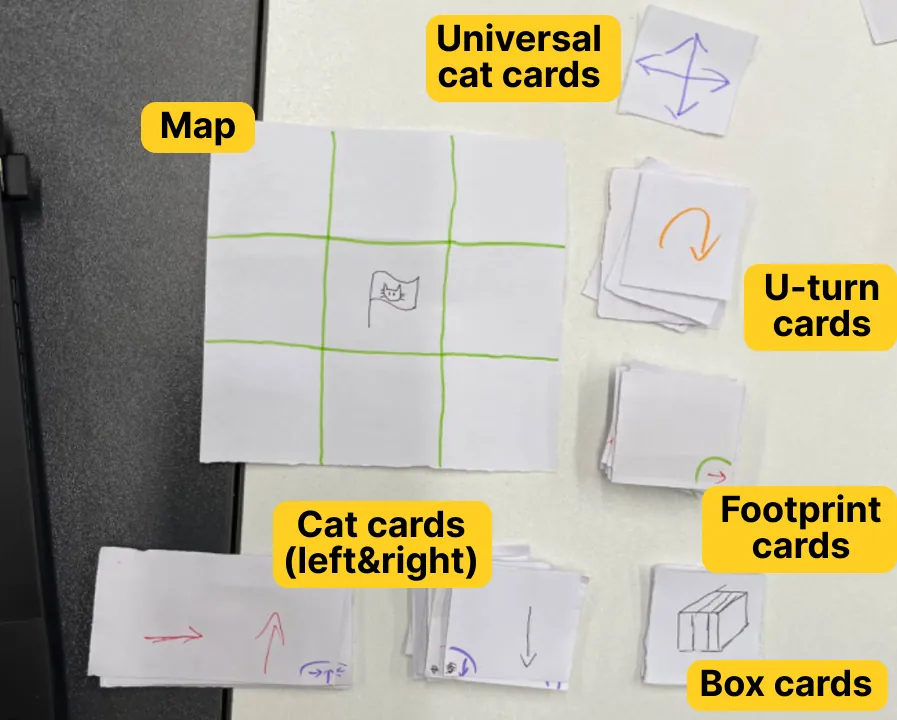
Universal Cat Card: A unique kitten card stackable on any directional footprint card (ignoring coverage rules). After placement, the next cat card can go in any grid adjacent to the universal kitten card.
U-turn Card: A footprint card altering the kitten’s direction by 180°. When played (without being placed on the map), it changes the kitten’s movement direction. *Note: The U-turn card only adjusts direction, not movement. After use, shuffle it back into the footprint card pile.
Newly added rules
- Universal cat cards can be stacked on any footprint card.
- U-turn cards can make your cat ‘turn around’ and walk in the opposite direction.
Findings during Test
Insufficient cards
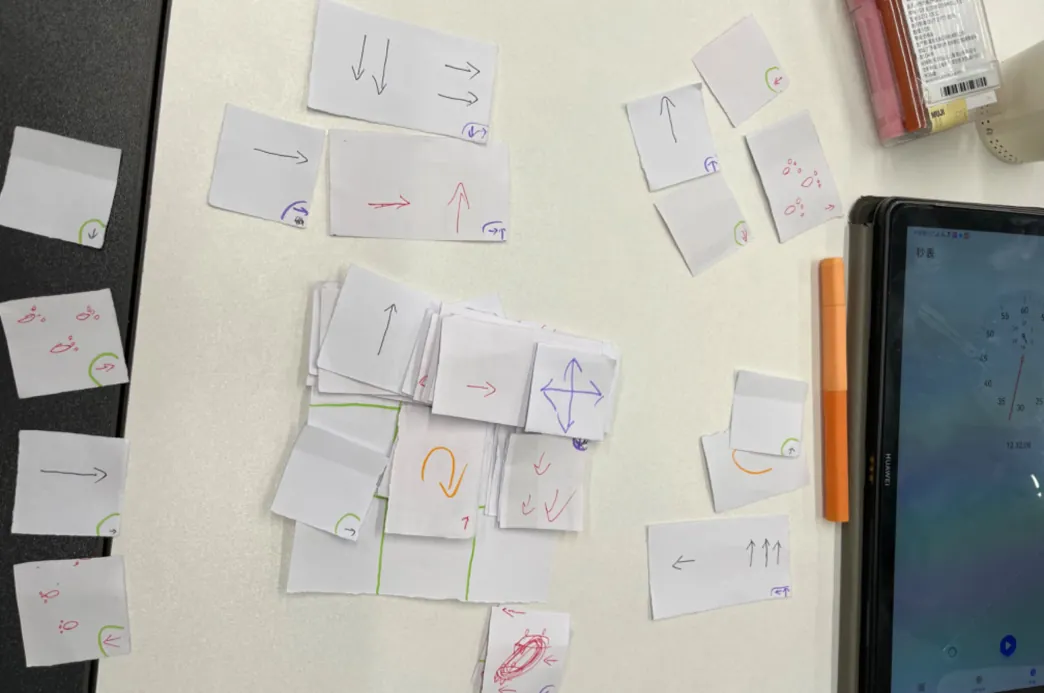
If a player starts the fourth round, there will be no cards on the table to draw.
Playability needs to be improved
The direction of the big cat card is limited, it is easy to die, and it is difficult for players to get the big cat card out of their hands and become unsolved.
Final Refinements
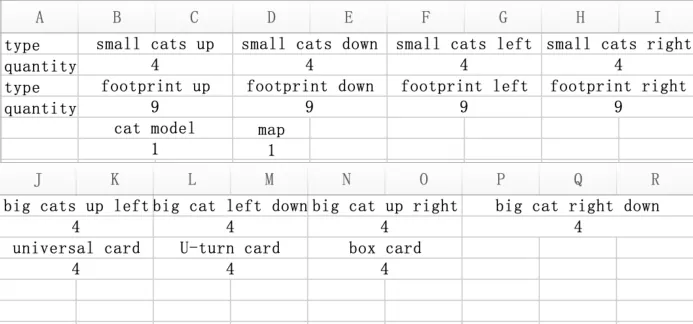
Before finalizing my game, I drew a table and recalculated the number of each card, adjusted the game values, and revised some details of the rules.
Random Selection
Kitten and footprint cards are drawn at the game’s start, with two additional footprint cards each turn. Through strategic card combinations, players can achieve their objectives with a degree of probability.
Hand Management
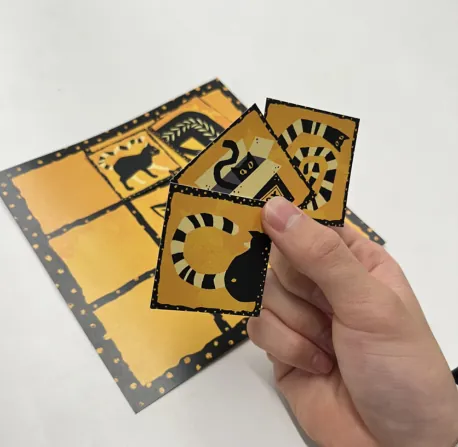
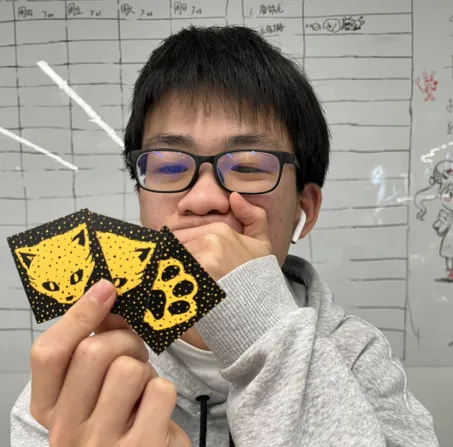
Players need to strategically use special cards to guide the direction and help themselves win.
Pair-making
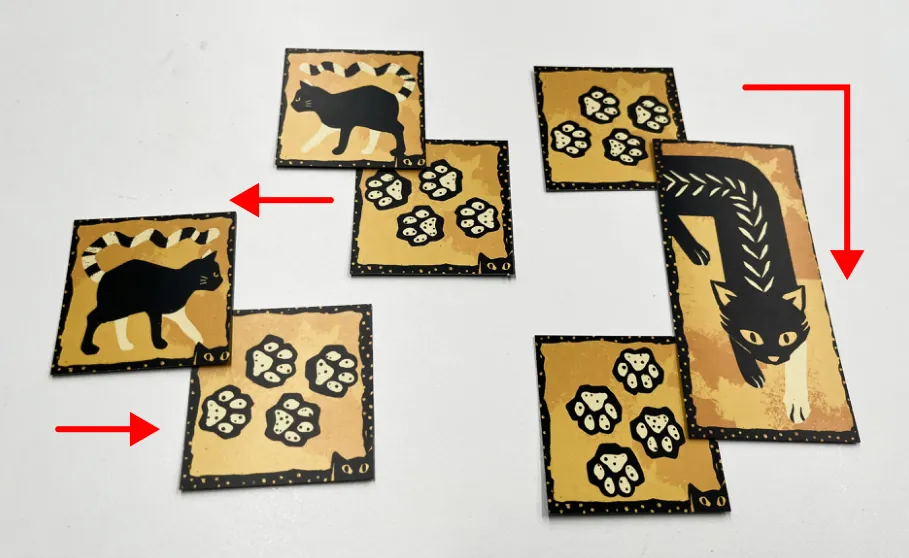
Players move the kitten one or two squares in the specified direction using a combination of kitten and footprint cards. The first player to play all kitten cards wins.
Area Movement
The map is divided into nine squares, each of which is equal in size. Players need to place their kitten cards on the map to guide its direction.
Game Flow
Read the diagram as text
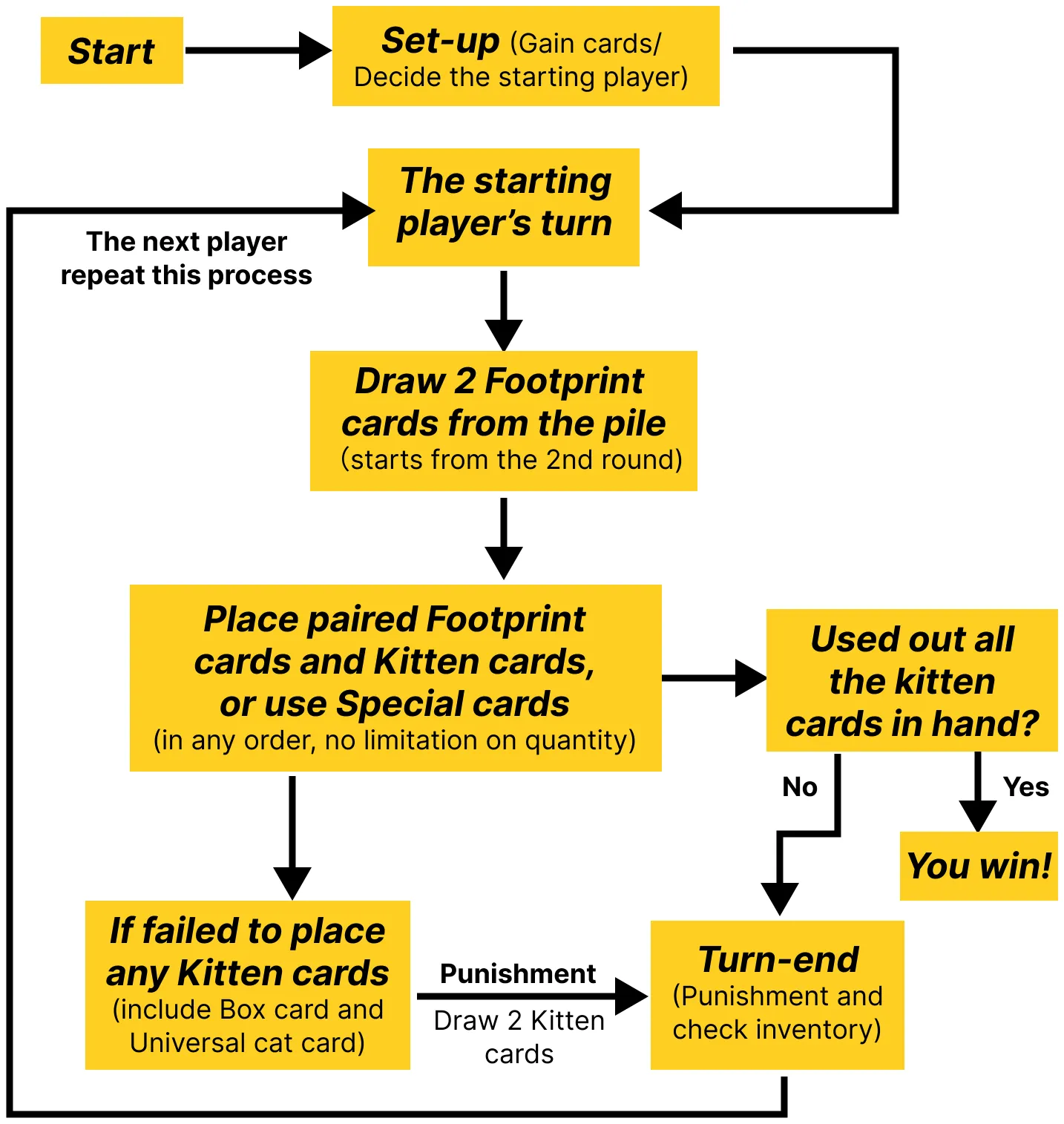
Flowchart of a turn: Start, then Set-up (gain cards, decide the starting player), then the starting player’s turn; draw 2 footprint cards from the pile (starts from the 2nd round); place paired footprint cards and kitten cards, or use special cards (in any order, no limitation on quantity); if all the kitten cards in hand are used up, you win; if not, the turn ends with punishment and an inventory check, where a player who failed to place any kitten cards (including box and universal cat cards) must draw 2 kitten cards; then the next player repeats this process.
Game Rules
Introduction
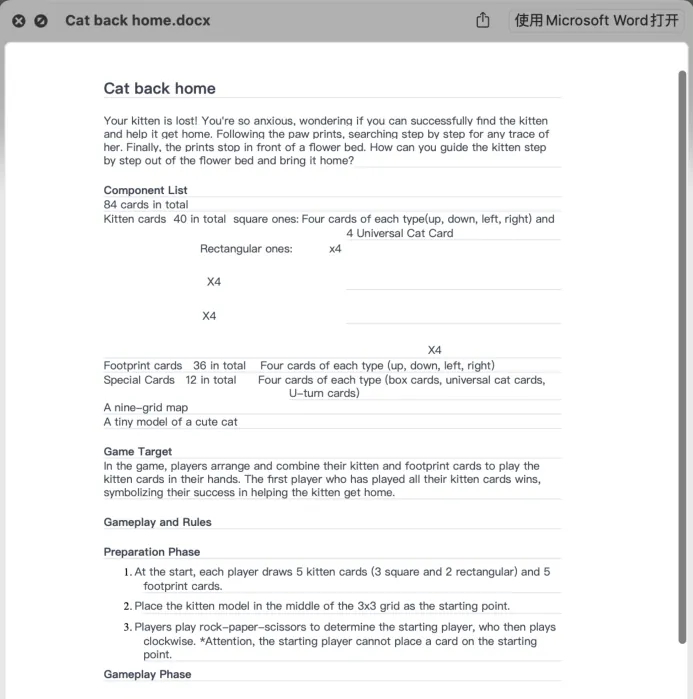
Your kitten is lost! Anxiously, you wonder if you can successfully find and guide it home. Following paw prints, search step by step until they stop in front of a flower bed. How can you guide the kitten out and bring it home?
Components
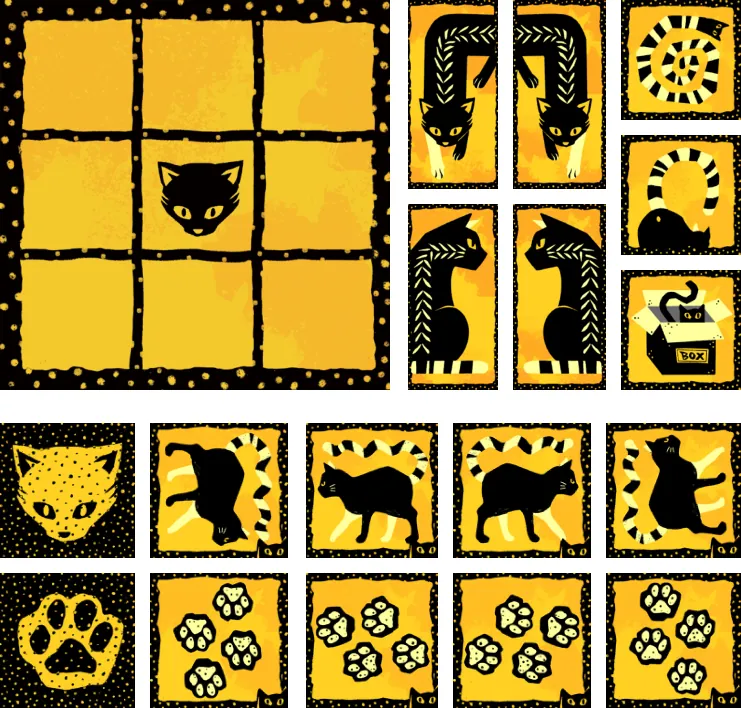
- Kitten cards x 40
- Footprint cards x 36
- Special cards x 12
- Map x 1
- Rulebook x 1
- Cat Model x 1
Game Target
Players strategically arrange and pair their kitten and footprint cards, aiming to play all their kitten cards. The first player to achieve this wins, symbolizing their success in guiding the kitten home.
Gameplay and Rules
Preparation Phase
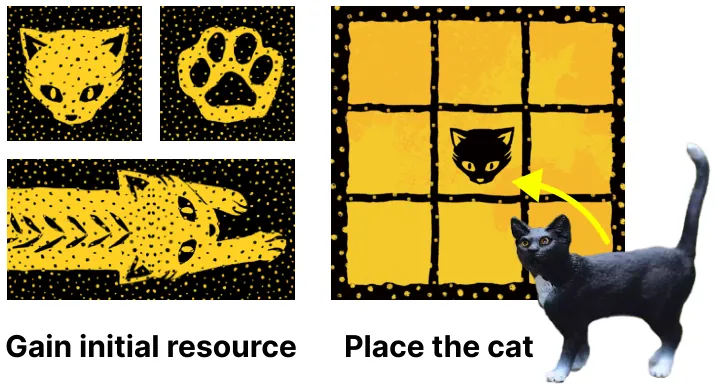
- At the start, each player draws 5 kitten cards (3 small and 2 big) and 5 footprint cards.
- Place the kitten model in the middle of the 3x3 grid as the starting point.
- Players play rock-paper-scissors to determine the starting player, who then plays clockwise. *Attention, the starting player cannot place a card on the starting point.
Gameplay Phase
Card-placing Rules
When the round begins, each player should draw 2 footprint cards from the deck. There is no limit to the number of cards played, but the following rules must be followed:
Coverage
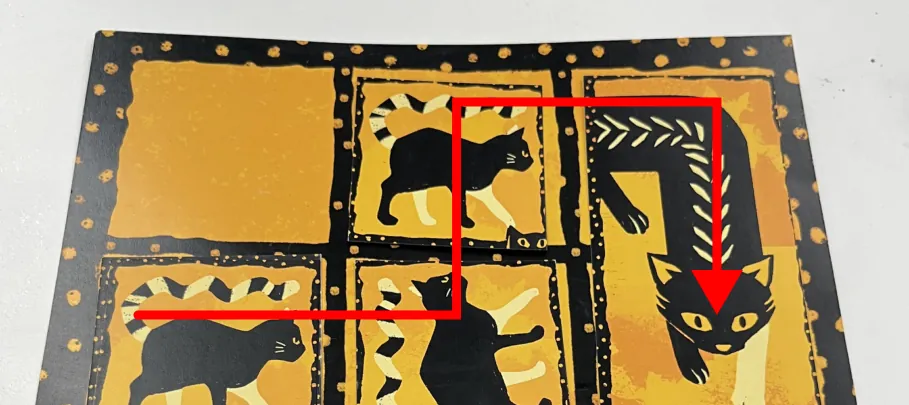
Kitten cards must cover footprint cards, with the kitten facing the same direction as the footprint; big kitten cards must be played with 2 matching-direction footprint cards.
Landing Spot and Direction
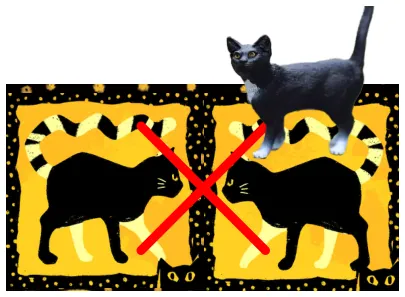
Kittens can’t turn around, so footprint cards must be placed in the next grid space in the direction the kitten is facing, not opposite or on the current spot.
Placement Orientation
When placing footprint and small kitten cards, ensure their orientation matches the map and cannot be rotated; big kitten cards have no fixed orientation and can be freely rotated.
Hitting a Wall
Kittens move along walls and cannot collide with them. Players cannot play cat and footprint cards facing a wall (as shown), preventing the kitten from hitting it.
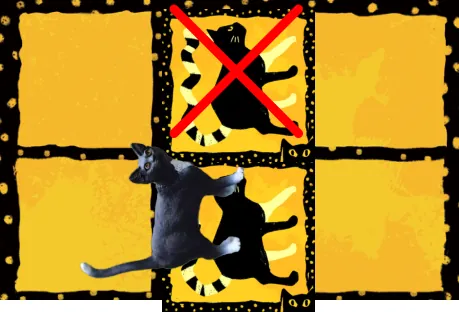
A player’s turn ends when they can no longer play cat cards, and the kitten stays on the last played card.
Turn-end Phase
Punishment: If a player fails to play at least 1 kitten card (including box and universal cat cards) during their turn, they must draw 1 small and 1 big kitten card from the deck.
Check the inventory of kitten and footprint card decks; if any deck has fewer than 2 cards, remove all cards from the map, except for the kitten’s current landing spot and special cards, and shuffle them back into the deck.
Special Cards
Box Card
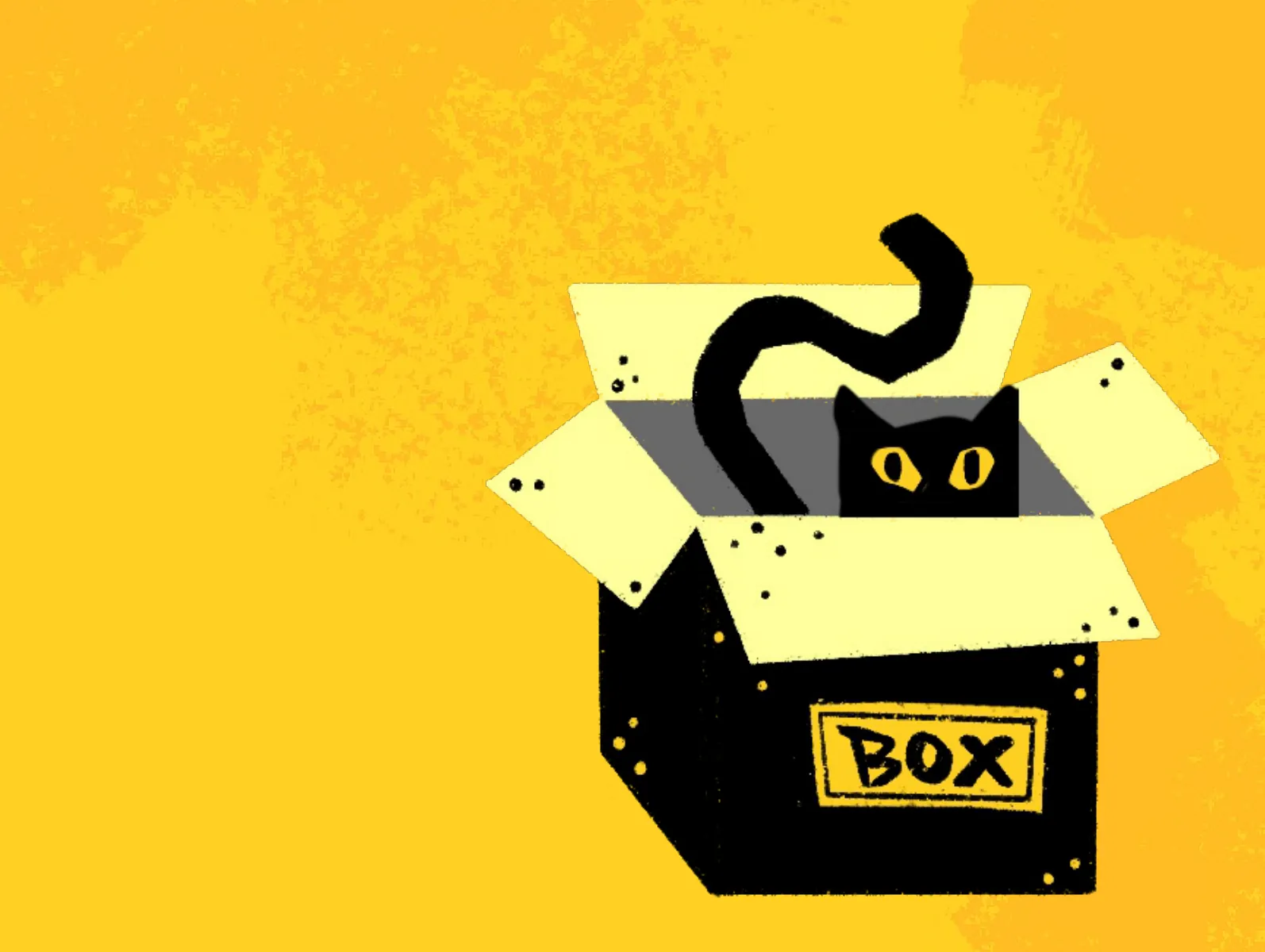
A unique kitten card serving as a one-turn obstacle, blocking the kitten from entering a specific grid space. Players can place the box card adjacent to the cat’s current landing spot without a footprint card beneath. Remove the box card from the map and shuffle it back into the square cat card pile when it returns to the turn of the player who placed it.

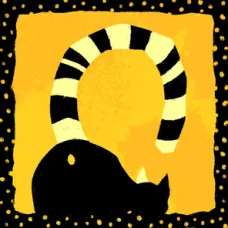
Universal Cat Card
A unique kitten card that can be stacked on any directional footprint card, bypassing coverage rules. After placing a universal card, the next cat card can be put in any grid space adjacent to the universal kitten card.
U-turn Card
A unique footprint card that changes the kitten’s direction by 180°. When a player plays a U-turn card (no need to place it on the map), the kitten’s direction changes. *The U-turn card only alters direction, not movement. After use, shuffle it back into the footprint card pile.
Visual Reference
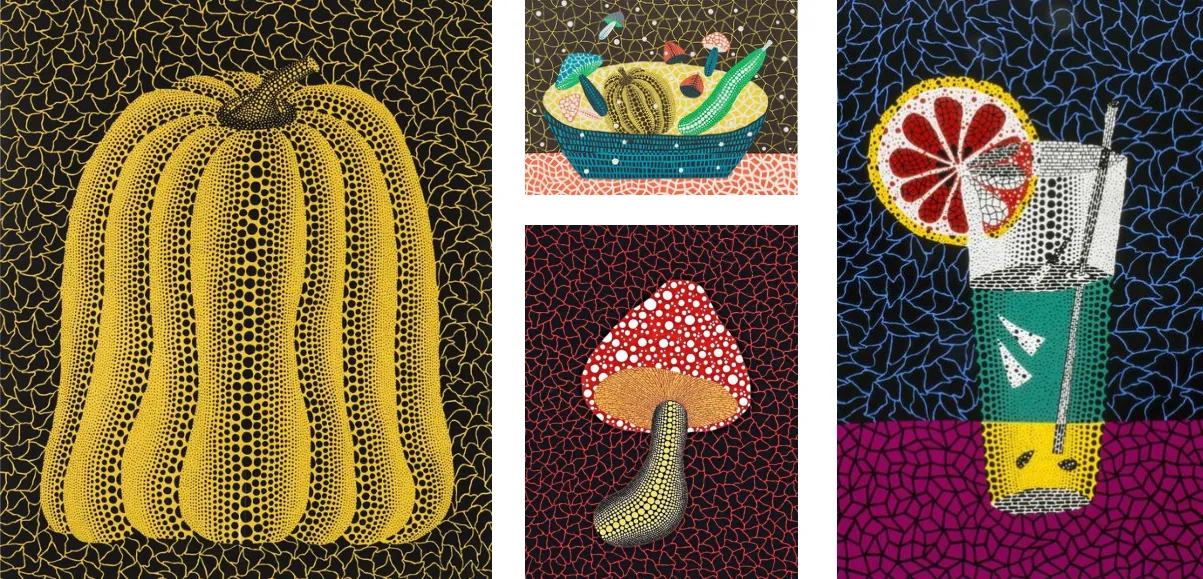
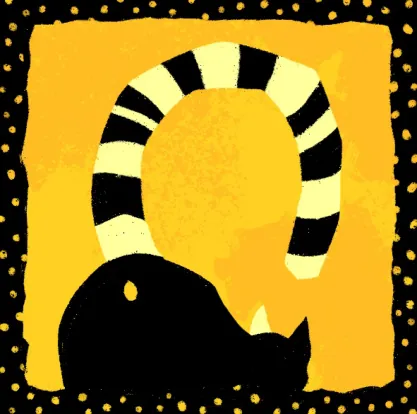
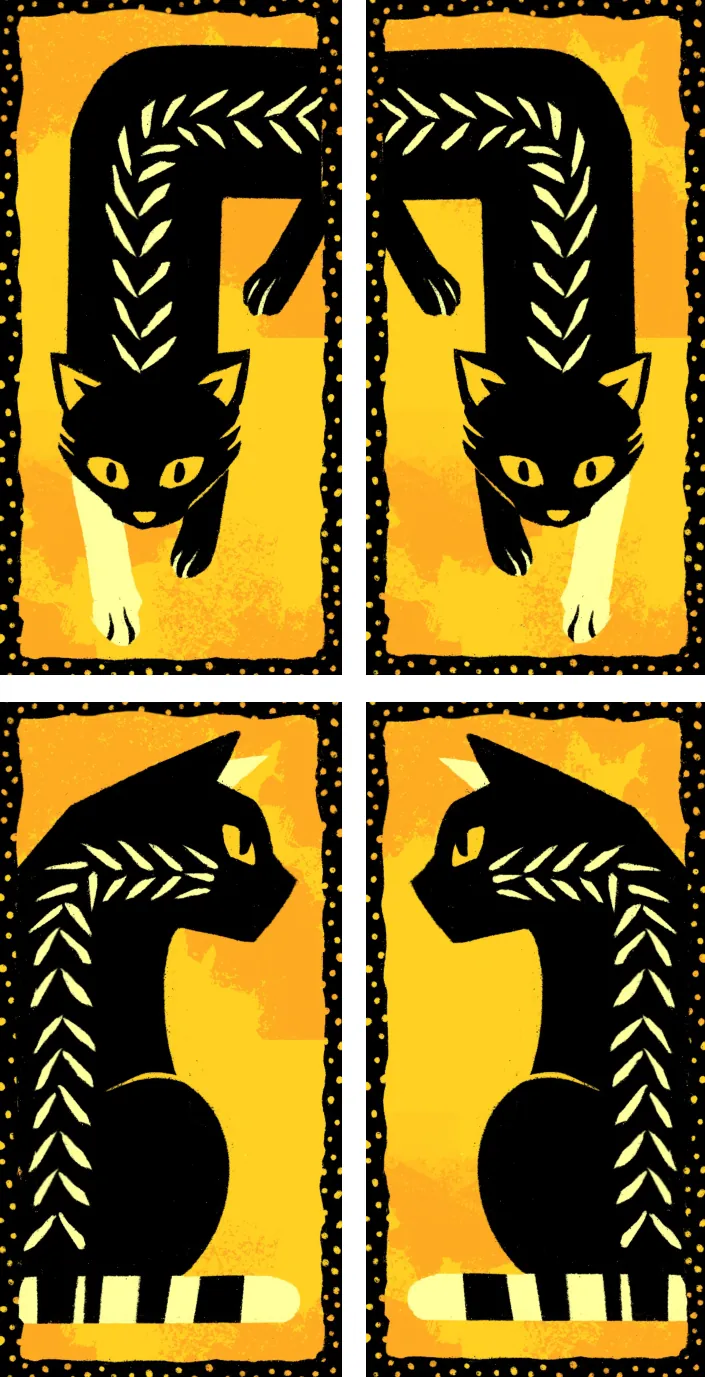
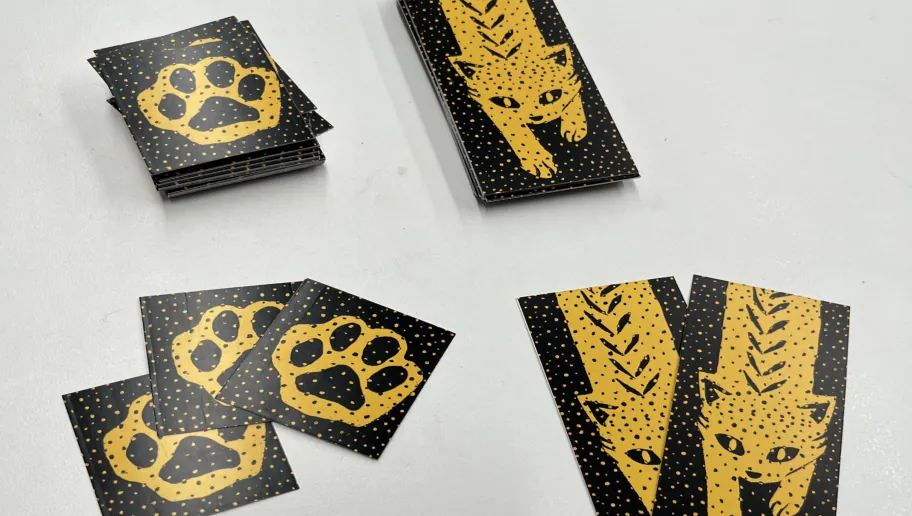
I am a fan of Yayoi Kusama, and I love the impactful colors and illusionary polka dots in her paintings. Therefore, I infused her style into the card design of the board game. I drew small cats in yellow and black, decorating the card edges and backs with inverted colors and polka dots.
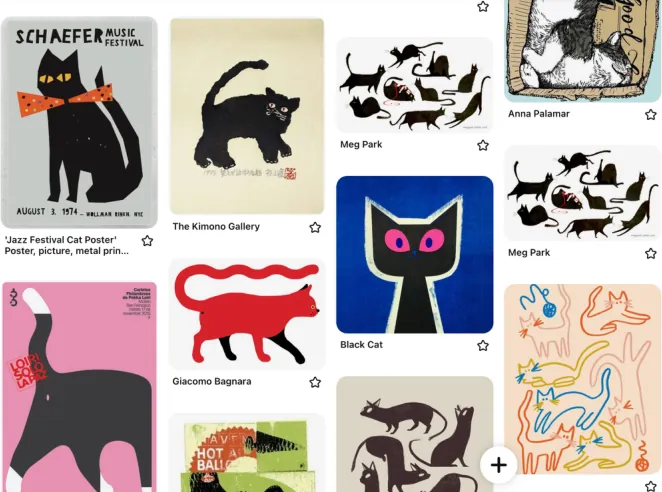
Additionally, to depict the cats well, especially to convey ‘direction’ effectively on the cards, I curated a mood board for the cats. I attempted to express their postures using a clean shape and decorate them with dots.
Visual Design